
6 min read
What Is Exosome Therapy?
What is exosome therapy, how does it work for skin and hair, and what does the evidence actually show? An honest, hype-free guide.
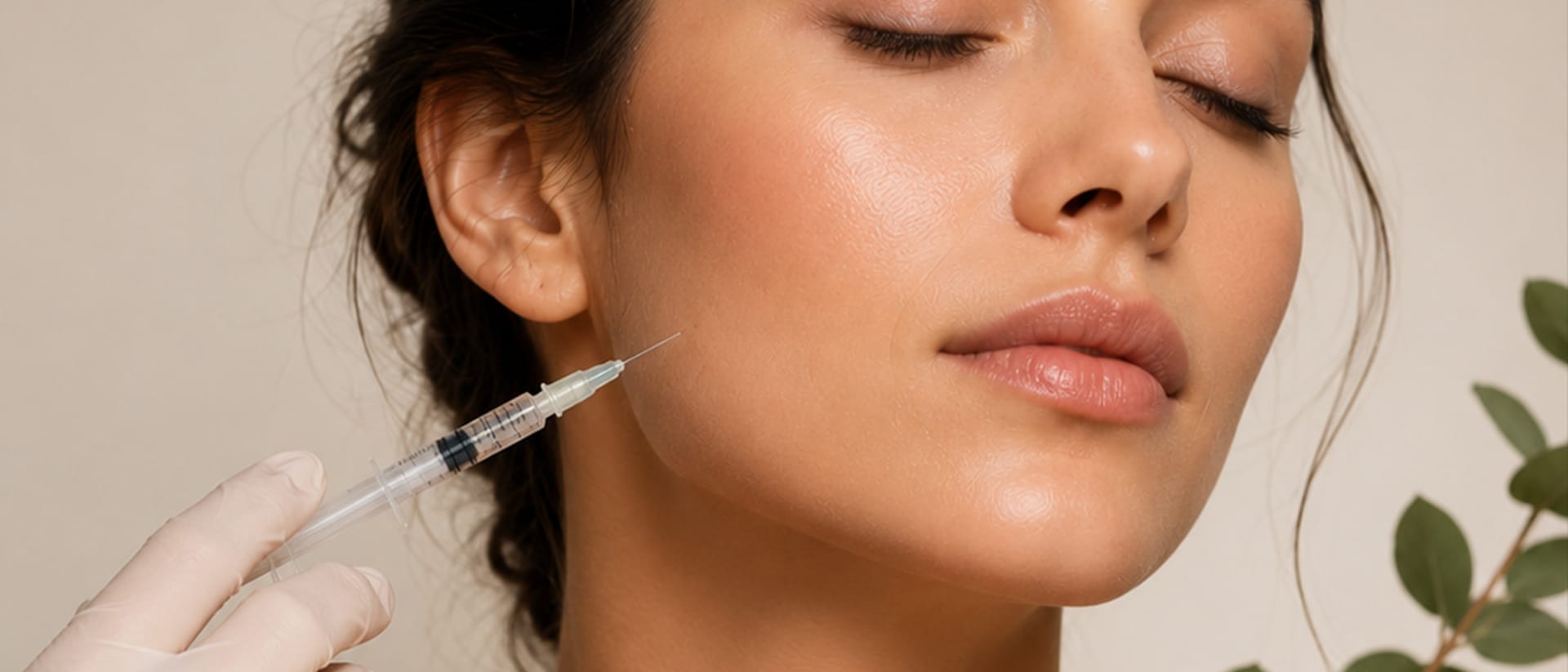
Exosome therapy is one of the most talked-about topics in skin and hair care right now, and also one of the most oversold. If you are researching it from abroad or planning a trip to Istanbul, you deserve a clear answer rather than marketing language. This guide explains what exosomes actually are, how they are used for skin and hair, what the current evidence does and does not show, and what a realistic expectation looks like.
What are exosomes? Tiny signaling vesicles between cells
Exosomes are extremely small vesicles — measured in nanometers — released by cells. Think of them as message packets. Each one carries proteins, growth factors, lipids, and signaling molecules such as microRNA.
Their job is communication: delivering information from one cell to another. An exosome is not a filler. It does not add volume or tissue. It carries signals. That places exosome therapy in a completely different category from volume-based dermal fillers or muscle-based botox, and squarely inside what we call regenerative aesthetics.
Products used in aesthetic practice are typically laboratory-produced, standardized exosome-containing preparations. Their source, composition, and regulatory status vary by country, so the specific product matters — and it is a fair question to ask before anything is applied.
How exosome therapy is thought to work
The underlying idea is straightforward. With aging, sun damage, or hair thinning, the renewal signals cells rely on become weaker. Exosome preparations aim to support those signals from the outside, encouraging the tissue's own repair activity.
Mechanisms studied in laboratory and early clinical work generally include:
- Stimulating fibroblasts and supporting collagen production
- Supporting the skin barrier and its ability to retain moisture
- Helping to balance inflammatory responses
- Supporting cellular activity around the hair follicle
One caution deserves emphasis. A mechanism that is biologically plausible is not the same thing as a clinical benefit proven in humans. We come back to that distinction below, because it is the honest center of this topic.
Where it is used: skin and hair
Skin
For skin, exosome preparations are usually applied after microneedling creates controlled micro-channels, or delivered through superficial mesotherapy-style injections. The goals are skin quality, radiance, fine lines, and overall vitality — supporting the skin you have rather than changing your face. It shares that philosophy with skin boosters and salmon DNA polynucleotide treatments.
Hair
For hair, the preparation is applied to the scalp in the early to moderate stages of thinning, with the aim of supporting the environment around the follicle. It is rarely considered on its own; it usually sits inside a broader hair loss treatment plan. We cover this in more depth in our article on exosome therapy for hair.
Exosomes, PRP, and polynucleotides are frequently confused with one another. We compare them side by side in PRP vs exosome vs polynucleotide.
Safety and level of evidence: the honest picture
This section is deliberately blunt, because much of what circulates online about exosome therapy claims more than the science currently supports.
Exosome therapy is an emerging field and remains under active research. What exists today is encouraging laboratory data and small-scale early clinical studies. What is still limited is large, long-term, randomized controlled evidence. That does not mean the approach is worthless. It means it is too early to speak in certainties — and the gap between those two statements matters.
Other points worth knowing:
- Regulation: How exosome-containing products are classified and approved differs from country to country and continues to evolve. You are entitled to ask about the regulatory status of the product being used.
- Standardization: "Exosome" is a category, not a single product. Source, purity, and concentration vary considerably between preparations, which makes results hard to compare across clinics or studies.
- Safety profile: Reported side effects are generally temporary and procedure-related — redness, mild swelling, or tenderness at the treated area. Long-term safety data, however, is still maturing precisely because the field is new.
- Not suitable for everyone: Active skin infection, certain autoimmune or oncological conditions, pregnancy, and breastfeeding are among the situations where treatment is postponed or not performed.
If a clinic will not walk you through this picture candidly, that itself is information. Our wider view on this is set out in is medical aesthetics safe?
Managing expectations
Exosome therapy is not a miracle, and it deserves to be discussed as what it actually is.
- Results are not immediate. Cellular processes take time, and change is usually gradual and subtle.
- Response varies from person to person, depending on age, skin condition, the stage of hair thinning, and general health.
- It is typically planned as a series of sessions followed by maintenance, not as a one-visit fix.
- In advanced hair loss or significant volume loss, exosome therapy does not replace surgical or other established options.
- Your dose, product, and session count can only be decided after an in-person examination. A protocol you read online carries no guarantee of fitting you.
For patients traveling to Istanbul
Our clinic is in Yeşilköy/Bakırköy, close to Istanbul Airport, which makes visits practical for both local and international patients. Because exosome therapy is session-based, it is worth planning realistically: an initial consultation and assessment come first, and we will tell you plainly if this is not the right option for you. Practical details about visiting are in our guide to medical aesthetics in Istanbul.
Frequently asked questions
Is exosome therapy the same as stem cell therapy? No. Exosomes are not cells; they are signaling vesicles released by cells and contain no living cells. The two are often confused, but they are distinct concepts, and both remain areas of ongoing research.
How many sessions are needed, and when will I see a difference? The number and spacing of sessions depend on the individual, the goal, and the treated area. Change is typically gradual and assessed over weeks. A specific number can only be given after an examination.
Does exosome therapy replace PRP? Not necessarily. They differ in composition and in the level of evidence behind them, and they may be considered as alternatives or as complementary options. Which one suits you is decided together during your examination.
If you would like to discuss whether exosome therapy is appropriate for you and what a realistic plan would look like, you are welcome to arrange a consultation.
This content is for informational purposes only and does not replace a medical consultation.