6 min read
Skin Boosters: Deep Hydration Explained
What are skin boosters, how do they differ from fillers, and who are they for? A clear guide to injectable hydration and skin quality.
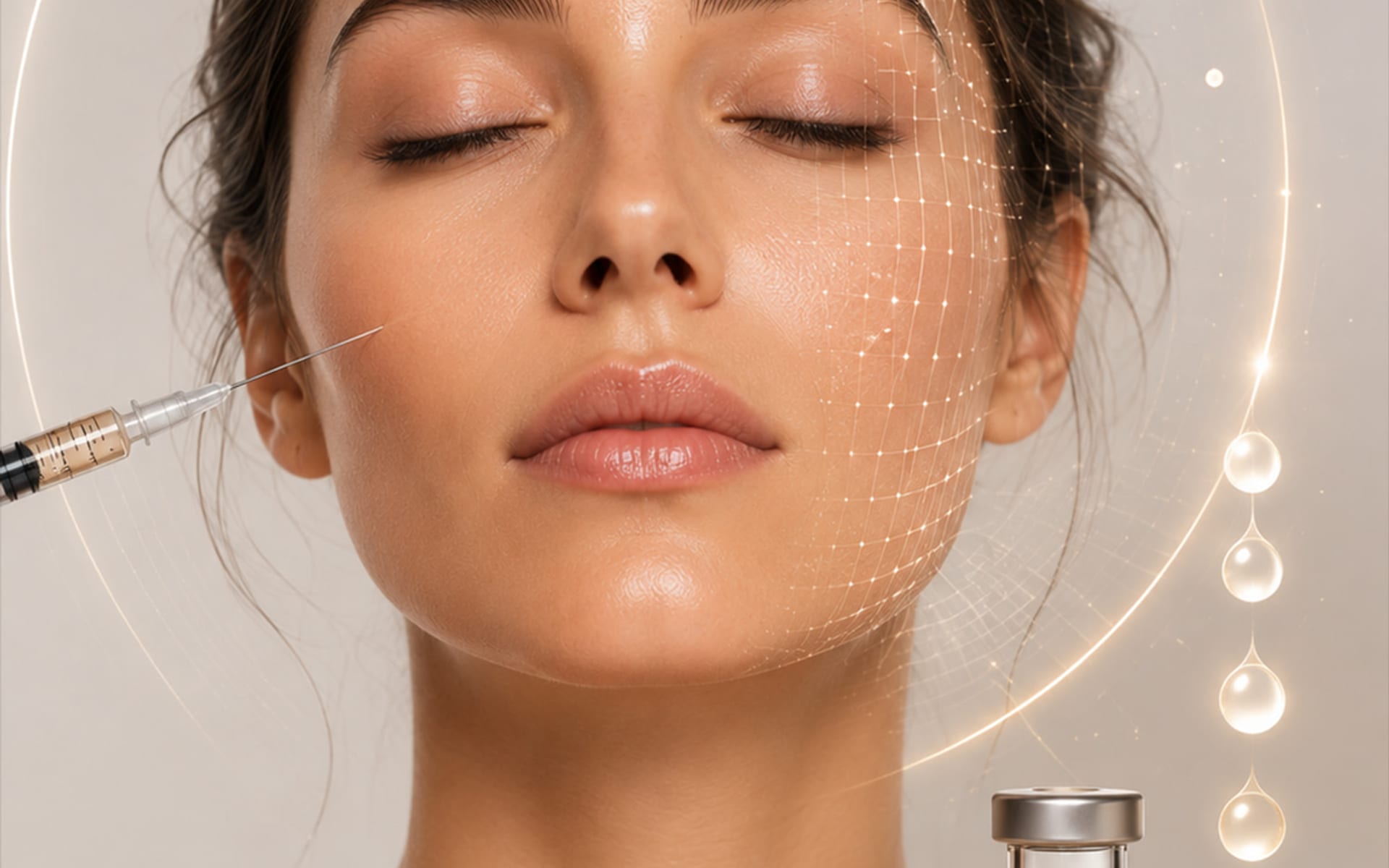
If your skin looks dull and tired no matter how much moisturizer you apply, the issue may not be wrinkles at all. It may be skin quality. Skin boosters are injectable hydration treatments designed to address exactly that: not volume, not contour, but the water content and texture of the skin itself. This guide explains what skin boosters are, how they differ from fillers, what is in them, who they suit, and what a treatment course typically involves.
What are skin boosters?
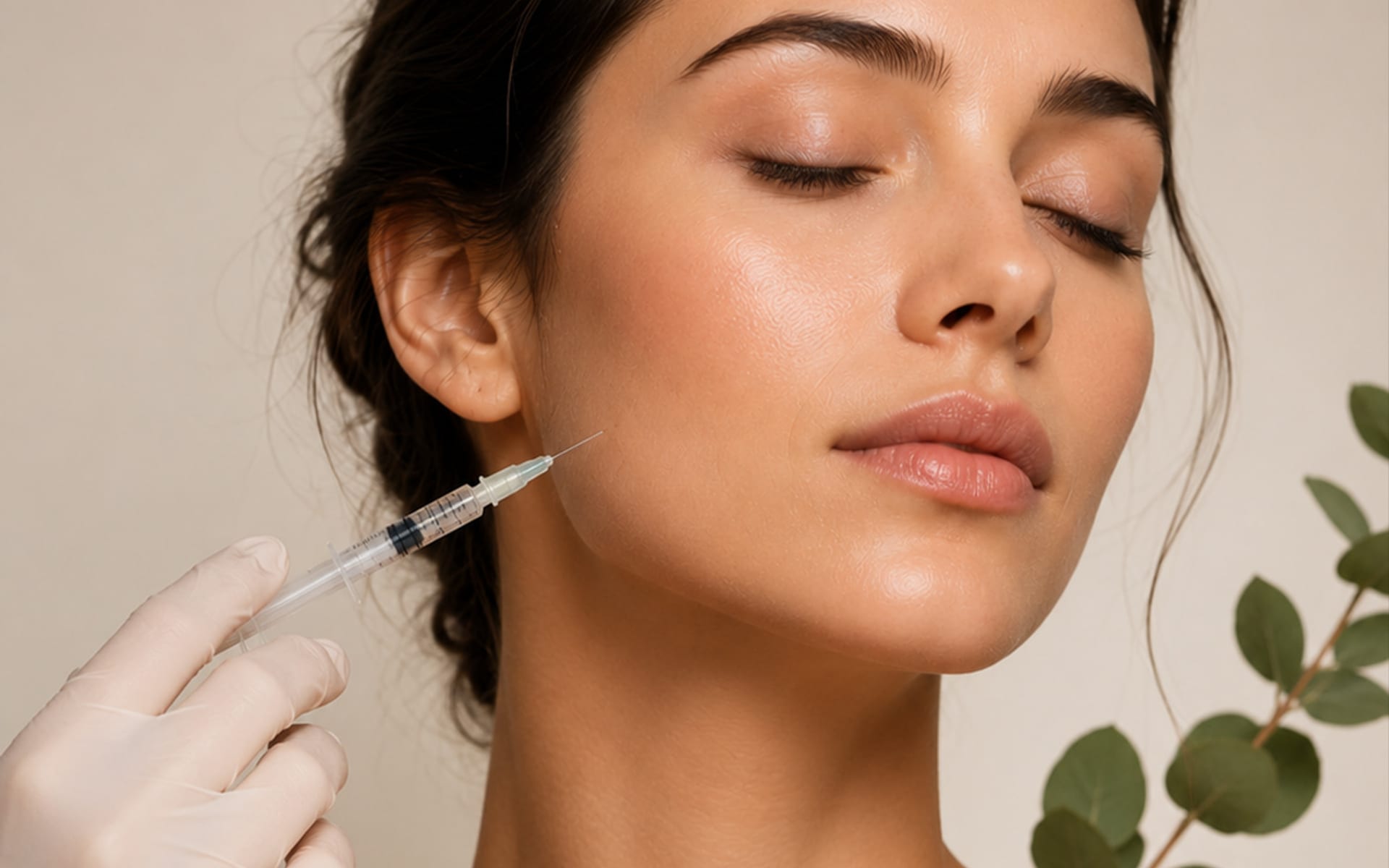
Skin boosters are hydrating injections placed into the upper layers of the skin (the dermis) in very small amounts, using fine needles. The goal is not to reshape a feature but to improve how the skin holds water, so it feels more supple and reflects light more evenly.
They are most often used on the face, but the neck, décolletage, and backs of the hands are also common areas, since dryness and thinning show early there. The effect is gradual rather than dramatic. Most people notice a change in skin quality over a course of sessions, not overnight.
Skin boosters vs. fillers: hydration, not volume
Skin boosters and dermal fillers are frequently confused because both are usually based on hyaluronic acid. Their purpose, however, is different.
- Dermal filler: a firmer, cross-linked gel placed to add volume or define contour — cheeks, jawline, chin, lips.
- Skin booster: a more fluid product spread across an area rather than concentrated in one point. It does not change shape; it supports hydration and skin texture.
Put simply, filler works on architecture, while skin boosters work on the surface quality of the skin. For some patients the two are planned together; for others, working on skin quality alone is enough. Which applies to you can only be decided after an in-person assessment of the face as a whole.
What is in a skin booster?
Most skin booster products are based on stabilized hyaluronic acid. Hyaluronic acid occurs naturally in the body and binds a large amount of water relative to its weight. Its concentration in the skin declines with age, which contributes to dryness, thinning, and a duller appearance.
"Stabilized" means the molecule has been lightly modified so that it stays in the skin longer than it otherwise would. Once placed, the product:
- Binds water and supports hydration in the treated area,
- Supports skin elasticity and a plumper feel,
- Is gradually broken down and absorbed by the body, so results are not permanent.
Some products add antioxidants, vitamins, or amino acids. Polynucleotide-based treatments such as salmon DNA are often discussed in the same conversation because they also target skin quality, but they are a separate product family working through a different mechanism. Which formulation is appropriate depends on your skin, and that is a clinical decision made at consultation rather than from a menu.
Who are skin boosters for?
Skin boosters may be an option for healthy adults whose main concern is skin quality rather than deep lines. They are commonly discussed by people who describe:
- Persistent dryness, tightness, or flaking,
- Skin that looks dull, matte, or "tired" even when well rested,
- Fine surface lines, as distinct from deeper expression lines,
- Skin texture affected by sun exposure, smoking, or poor sleep,
- Crepey thinning on the neck, décolletage, or hands.
As with any injectable treatment, there are situations where it is postponed or not performed: active skin infection or inflammation, open wounds in the treatment area, certain autoimmune conditions, bleeding disorders, and pregnancy or breastfeeding. This is why suitability, product choice, and number of sessions are determined only after an examination. No responsible clinic can promise a fixed protocol in advance.
If you want to compare this with other approaches to skin quality, our overview of skin rejuvenation methods is a useful starting point.
Sessions, aftercare, and planning a trip
Skin boosters are usually planned as an initial series of sessions, spaced a few weeks apart, followed by maintenance sessions at intervals. The exact number and spacing vary by person, depending on skin condition, age, and lifestyle.
A topical anesthetic cream may be applied beforehand for comfort. Afterward, small bumps at the injection points, redness, or mild bruising can occur and generally settle within a few days. General aftercare usually includes:
- Avoiding makeup and pressure on the area for the first 24 hours,
- Avoiding sauna, steam rooms, intense exercise, and direct sun for a few days,
- Daily sunscreen,
- Consistent hydration and sleep.
For patients traveling to Istanbul, the practical point is spacing. Because skin boosters work best as a course, a single visit is rarely the whole story. Some patients complete an initial session here and continue maintenance closer to home; others plan return visits. The clinic is in Yeşilköy/Bakırköy, close to Istanbul Airport, which makes short, low-friction visits realistic. What matters is that the plan is discussed honestly before you book flights, not after.
Frequently asked questions
Are skin boosters the same as fillers? No. Both are usually hyaluronic acid based, but fillers add volume and define contour, while skin boosters do not change shape. They support the skin's hydration and texture. Which one suits you is determined at an in-person assessment.
How long do the results last? They are not permanent. The product is gradually absorbed by the body, and how long the effect lasts varies from person to person depending on the area treated and skin condition. Maintenance sessions are typically planned at intervals.
Can I fly home the same week? Most people return to normal activity the same day. Because temporary redness or small bumps at the injection points are possible, it is sensible to leave a few days before any event you care about, and to discuss timing during your first consultation.
If you would like to understand whether hydration, volume, or a different approach fits your skin, you are welcome to arrange a consultation to discuss it.
This content is for informational purposes only and does not replace a medical consultation.